.avif)
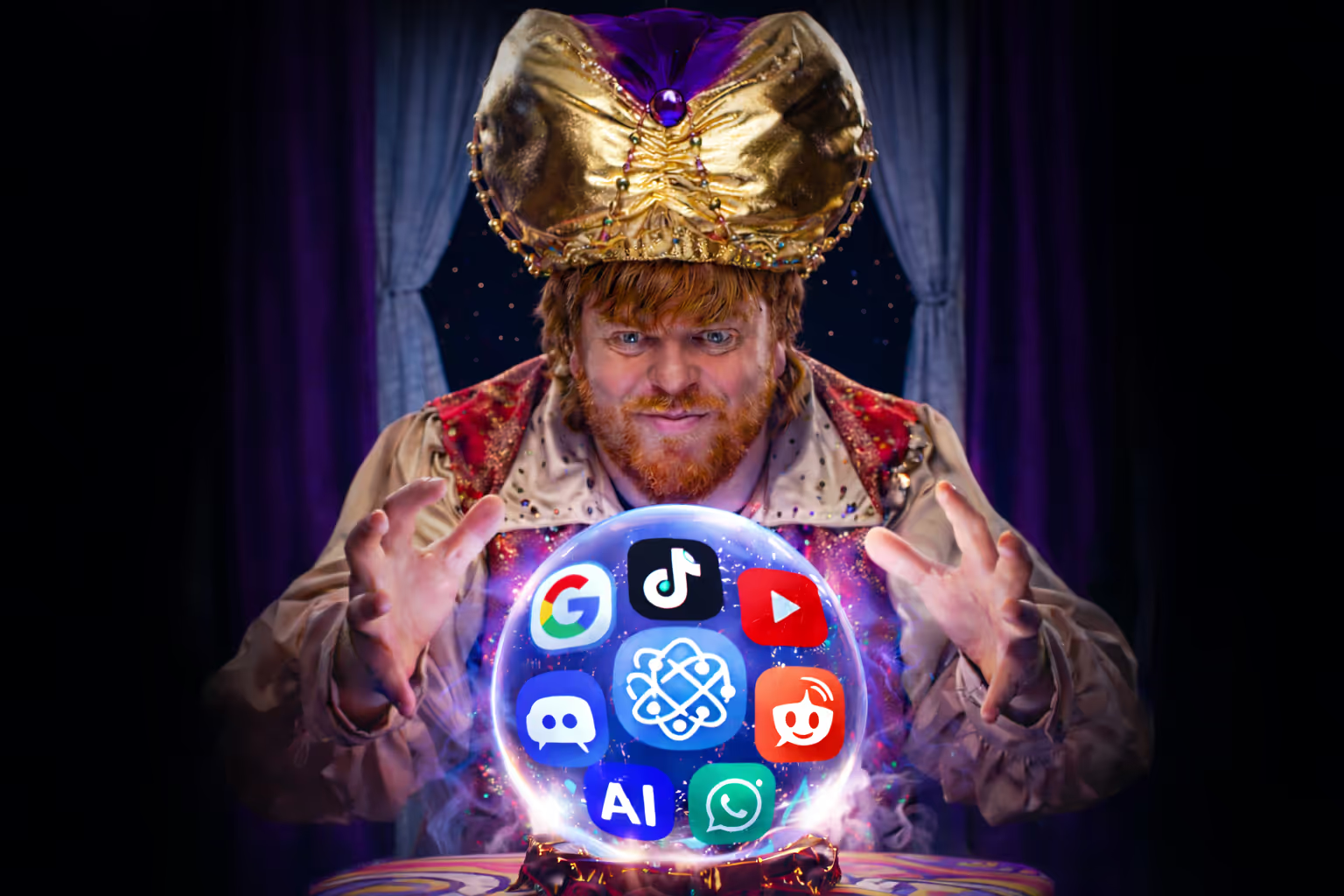
For years, my thought process when developing my search marketing predictions for the upcoming year have focused on the same question… What’s changing on Google?
But as we prepare to go into 2026, that question is really starting to feel outdated. In mid-2024 we began testing the proposition for an agency that acknowledged that social-search was a thing (and we were a year early if we’re being honest). But, as we prepare for Christmas and it becomes time to write my predictions for 2026, I feel increasingly confident in my theory. Search no longer belongs to a single platform,and it hasn’t for some time.
People don’t just “Google” anymore. They discover products on TikTok, validate opinions on Reddit, learn through YouTube, ask AI for recommendations, and then they eventually visit a website. Search has become a behaviour that happens everywhere your audience is spending time, shaped by trust, context, and community rather than rankings.
This is where most search marketing strategies quietly fall apart.
- They’re still built for channels, not behaviours.
- They optimise for traffic, instead of optimising for revenue.
- They measure success in clicks, while decisions are being made elsewhere.
By 2026, the brands that win won’t be the ones that rank first, they’ll be the ones that are present everywhere their audience looks for answers. This is what we mean by Search Everywhere.
And, I want to be clear, ‘Search Everywhere’ was never meant to be a replacement for SEO. Instead, it’s a call to arms, a rallying call, a proposition that only deviation can deliver. To us, it has been created as a strategic effort that recognises discoverability now spans social platforms, AI assistants, marketplaces, communities, and yes traditional search engines, and it does so all at once as a connected universe.
So, here, we’ll break down our key 2026 marketing predictions through a Search Everywhere lens, and explain what brands should be doing now to stay present, trusted, and preferred in a world where search no longer lives in one place.
Prediction #1: Social Platforms Will Be the Primary Search Engine for Discovery
By the end of 2026, for the majority of users, discovery and research (TOFU) won’t start on Google, it will start on social platforms.
According to HubSpot research, 31% of consumers use social media to find answers to their questions already, a figure that actually exceeds the share of users relying on AI tools at the moment.
Furthermore, 29% of Gen Z and Millennials say they prefer social media over traditional search engines for discovery. And whilst overall, only 15% of users currently prefer social-search over traditional, when we narrow the focus to those same Gen Z and Millennial audience demos, that figure rises to 49%. To put it simply, this is a prediction we can already see the foundations of.
On social platforms, search isn’t buried behind a blue link, it’s visual, social, and contextual. A short video can explain a product faster than a 2,000-word blog. A Reddit thread can validate or kill a purchase decision in minutes. And this content is discovered at the exact moment intent is forming.
And in a world where mobile search continues to dominate, with over half of consumers using phones as their primary search device, mobile-first, social-native discovery content becomes even more critical.
For brands, this creates a fundamental challenge. Most social strategies are still built for likes and reach, not for search intent. Strategic considerations are all about ‘virality’, not answering high-intent questions. A Search Everywhere approach flips that logic.
Winning brands in 2026 will treat social platforms as search environments, designing content that:
- Answers high-intent questions natively
- Uses the language audiences actually search with on each platform
- Surfaces proof and perspective, not just promotion
- Appears consistently across formats, platforms, and creator networks
The goal? Building searchable relevance wherever discovery happens.
Because in 2026, if your brand isn’t visible on social platforms at the moment curiosity turns into intent, you won’t get the chance to rank later. As that future search will likely be a brand search, and one of your competitors will have put themselves into the position of being the preferred choice, and being at the heart of that branded search.
Prediction #2: AI (Most likely via Agentic Experiences) Will Collapse the Consideration Funnel
By this time next year, there is more to think about than just where people turn to for discovery and research, there is going to be a real shift in how many steps of the traditional funnel they skip.
AI assistants are already collapsing the traditional consideration funnel. Instead of researching across multiple tabs, comparing articles, watching reviews, and weighing options over time, users are increasingly asking a single question:
“What’s the best option for me?”
And they expect a single, personalised, confident answer.
But here is a thought, AI doesn’t introduce new intent. Instead, AI/LLMs are just aggregating for existing intent, compressing it.
Awareness, research, comparison, and recommendation are now happening in one interaction. The messy middle still exists, but it’s being handled behind the scenes by large language models, not by users clicking through ten blue links. And, it happens in the space of seconds, rather than over a period of time as and when a user remembers or rediscovers their pain/need/want/desire.
And, it is this thought that has huge implications for discoverability.
Because, unlike traditional search engines with a utilitarian approach to returning results, when an AI assistant generates an answer, it synthesises consensus but creates an individualistic, personalised response.. It draws from:
- Brand mentions across the web
- Reviews and first-hand experiences
- Community discussions (forums, Reddit, social platforms)
- Creator content and expert opinions
- Clear, consistent brand positioning
In other words, AI doesn’t reward optimisation, it rewards presence and preference at scale.
This is where many brands will struggle in 2026.
If your visibility is concentrated in one channel, even if that channel is Google via your on-site signals, you are risking presence within an AI/LLM response. A brand that ranks well but is rarely discussed, reviewed, or referenced across platforms is far less likely to be recommended than a brand with consistent, cross-platform validation.
A Search Everywhere strategy is what prepares brands for this reality. Instead of asking “How do we rank?”, winning teams will ask:
- Are we being mentioned across social, community, and creator ecosystems?
- Do real people advocate for us in places AI models learn from?
- Is our point of view consistent wherever our brand appears?
- Are we visible at the moments AI is asked to decide, not just inform?
At some point in 2026, consideration won’t be something users do, it will be something AI performs on their behalf. And in that world, brands won’t compete for clicks. They’ll compete for inclusion.
Prediction #3: Brand Preference > SEO Rankings
SEO isn’t dead… It won’t disappear, but the way it works will fundamentally change over the next 12 months (A change we’ve been trying to get brands to invest in this year and are seeing massive benefits from the mindset shift).
Why? Well, It’s because the era of “keywords first” optimization is ending (To be blunt… THANK FUCK).
Not because keywords no longer matter, but because rankings are increasingly a lagging indicator of something far more powerful: brand preference.
There are many different approaches, algorithms, ranking factors across this developing search universe, however, one thing that can be seen across the conversation and landscape of Search engines, social platforms, and AI systems, is that they are all converging on the same underlying question:
Is this a brand people recognise, reference, and trust beyond its own website?
In a Search Everywhere world, authority isn’t built in isolation. It’s earned across the environments where people form opinions, and we’re often trying to achieve preference long before they ever search on Google.
An Example: Creator-First Authority - LEGO
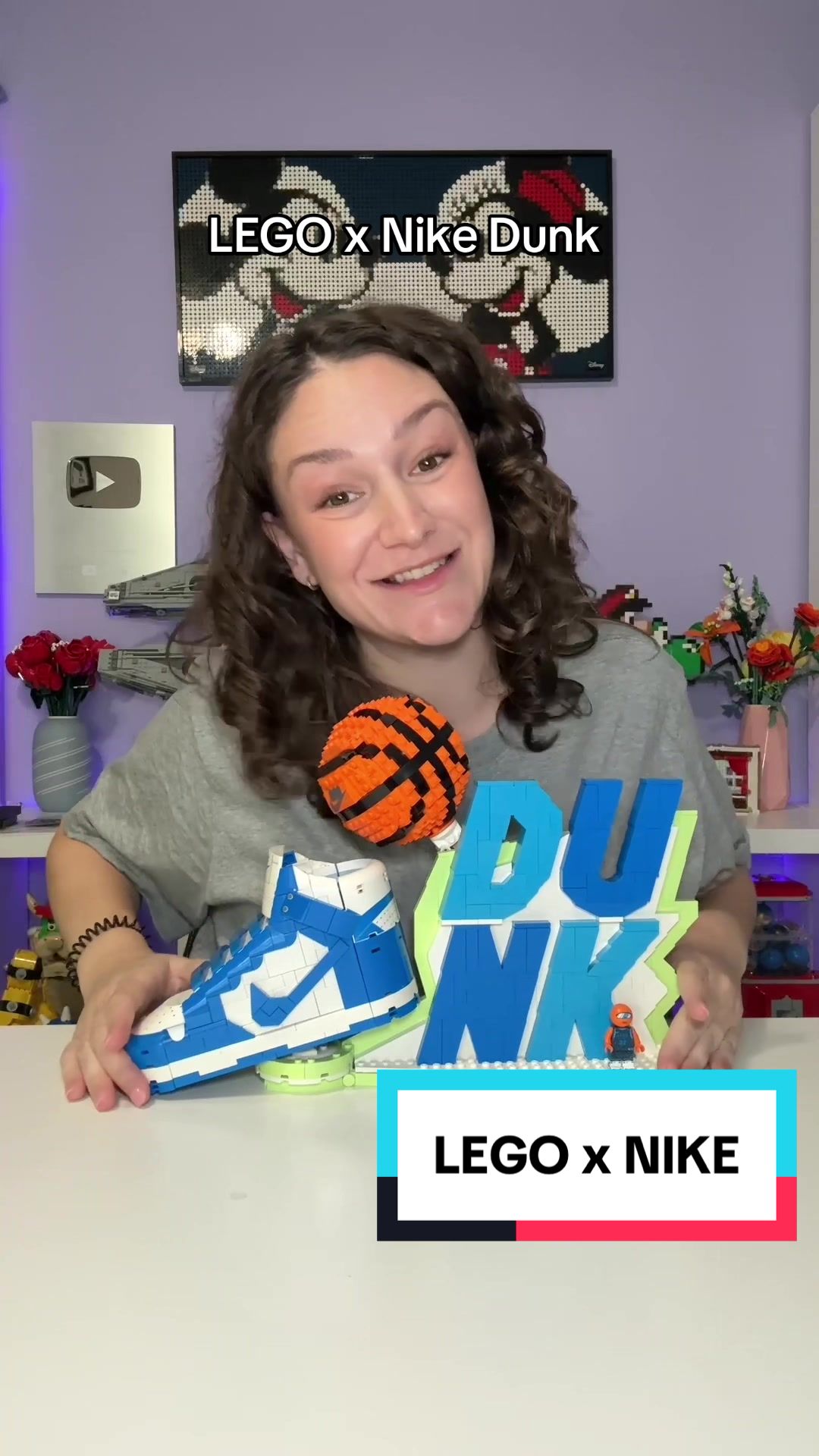
LEGO is a textbook example of a creator-first authority brand.
Across YouTube, TikTok, Instagram, and Twitch, LEGO isn’t just advertising… it’s being built, remixed, reviewed, and showcased by creators at scale. From ‘Adult Fans of LEGO’ communities to large-scale creator collaborations, LEGO appears organically in content people actively search for: Pillars? Think builds, reviews, challenges, and tutorials.
This matters because:
- Creators act as trusted intermediaries
- Content is discoverable via social and video search
- LEGO is referenced naturally in high-intent moments
The result? LEGO doesn’t need to fight for attention through aggressive optimisation. Its rankings, visibility, and brand demand are a byproduct of being everywhere its audience already looks.
Another Example: Community-Led Authority - Refy
.jpg)
Refy is another example of a brand who are thriving from social-search via community-led growth.
Rather than relying on heavy top-down messaging, Refy has built a brand that thrives on:
- Peer recommendations
- UGC tutorials and routines
- Comment-driven discovery on TikTok and Instagram
- Loyal advocates who answer questions on the brand’s behalf
When people search “Is Refy worth it?” or “How to use Refy brow products”, they don’t just find brand content (Which would appear inauthentic and forced) they find real users explaining, demonstrating, and defending the brand.
That community presence creates trust that no PDP ever could.
In a Search Everywhere context, Refy’s authority doesn’t come from Backlink profiles, technical foundations, and the traditional SEO factors (some of which are still important), it comes from being actively discussed, demonstrated, and validated in public.
Why Rankings Are Becoming Secondary
Both LEGO and Refy illustrate the same underlying shift.
Authority signals now come from a changing conversation of factors. You should be thinking about creator mentions that carry trust, community discussion that validates relevance, consistent narratives and points of view that reinforce brand meaning all packaged with a cultural presence that keeps brands visible in real conversations
As these signals compound, presence follows… not the other way around.
A brand can publish perfectly optimised content and still struggle if it isn’t referenced elsewhere. Meanwhile, brands embedded in creator ecosystems and communities continue to surface across search engines, social platforms, and AI recommendations (even in cases where their SEO isn’t technically flawless).
Let’s hear from Deviation’s Senior Search Everywhere Strategist, Maaria Khatri, on one of her predictions for 2026.
Prediction #4: Micro-Influencers Will Become the Preferred Growth Lever for Brands
For years, influencer marketing has been thought of in terms of scale: the bigger the following and the bigger name = the better the partnership. But as we move into 2026, that model is starting to crack.
Not only are partnerships with mega influencers mega expensive but brands are realising that reach alone isn’t what builds trust - and trust (along with attention) is now the currency that actually drives discoverability.
Micro-influencers are becoming the preferred choice because they operate closer to culture, closer to community, and closer to real decision-making moments. They don’t speak to an audience, they become part of the conversation.. Their content feels native, unpolished, and credible in a way that highly produced, celebrity-led campaigns increasingly don’t.
This shift isn’t about budgets tightening or brands “settling” for smaller creators. It’s about performance. Recent 2025 research shows that brands are already favouring micro and mid-tier creators because they consistently deliver higher engagement, stronger trust signals, and better cost efficiency than macro or celebrity influencers. In other words, smaller creators are doing more of the work that actually matters.
In a Search Everywhere world, this matters more than ever.
Micro-influencers aren’t just creating large scale content, they create searchable moments. You’ll find their videos ‘rank’ on TikTok, answering the things their audience need to hear. Their opinions surface in comment threads. Their routines and recommendations are repeated across platforms, referenced in communities, and increasingly pulled into AI-generated answers.
These are exactly the environments where modern discovery happens.
Large influencers may still offer awareness, but micro-influencers build preference. And preference is what shapes branded search, AI recommendations, and final purchase decisions.
By 2026, brands won’t be asking “Who has the biggest audience?”
They’ll be asking “Who does our audience already trust?”
The brands that win won’t rely on a handful of high-cost creators. They’ll build networks of micro-influencers embedded across niches, platforms and communities - compounding presence, credibility and influence everywhere their audience looks for answers. Think EEAT but taken to social and developed at scale.
Prediction #5: Measurement Will Become a Revenue-Led Discipline, Not a Traffic Report
I am super hopeful around this particular prediction.
Why? Well, looking back, this should have always been the way, if not for SEOs caring about their own game vs what actually makes an impact for the brand/business they are representing or working for. So, by this time next year, I sincerely hope that we see a shift in reporting.
Search, social, creators, communities, and AI will all influence revenue, but most measurement frameworks still treat them as separate disciplines. SEO reports rankings and traffic. Social reports engagement. Influencers report reach. Revenue sits somewhere else entirely and it isn’t always the primary focus of any of these disciplines… but especially SEO.
That disconnect will become unsustainable.
In a Search Everywhere world, discovery doesn’t happen in a straight line or via a funnel, and revenue certainly doesn’t come that way either. Audiences, especially digital native generations, move fluidly between platforms, creators, AI tools, and communities before converting.
Therefore, measuring success by isolated channel metrics hides the true drivers of growth, and nowhere is this more obvious than in the slow death of traditional attribution.
Attribution models were built for a world where journeys were linear, and channels distinct in their role, a simpler time. That world no longer exists. Today, a single purchase decision might be influenced by a TikTok video, validated through Reddit, reinforced by a YouTube review, surfaced again by an AI recommendation, and finally converted via branded search. No attribution model can cleanly assign credit across that path - and trying to do so often creates false confidence rather than real insight.
As a result, brands that over-rely on last-click, first-click, or even multi-touch attribution end up optimising for what’s measurable, not what’s meaningful. Channels that influence trust and demand get undervalued because they don’t own the final click, while channels that capture demand take disproportionate credit. The outcome isn’t better performance…it’s distorted decision-making.
So by the end of 2026, the most effective, truly efficient, brands won’t chase perfect attribution. They’ll accept that influence is distributed, messy, and non-linear and they’ll instead shift towards measurement models that prioritise presence, preference, consistency, and revenue correlation over the models we have adopted in the past.
I believe that leading brands will stop asking “What did SEO deliver?” and start asking a more meaningful business question:
“What actually influenced revenue?”
So, my final prediction is that revenue will become the pillar of reporting (right where it should have always been), and the conversation will move beyond faking attribution perfection.
Let’s wrap this up
When I look back on 2026, I expect to see a landscape where organic search marketing won’t be defined by platforms, algorithms, or channels. It will be defined by how well brands understand and adapt to real discovery behaviour.
Search now happens across social feeds, creator content, communities, AI assistants, and traditional search engines, often simultaneously, and rarely in a straight line. The predictions outlined here all point to the same underlying truth: discoverability is no longer something you optimise for in isolation. It’s something you earn through presence, authority, and relevance everywhere your audience looks for answers - as you become the preferred brand within a conversation.
- Social platforms are becoming the default discovery layer.
- AI is collapsing the consideration funnel.
- Authority is overtaking optimisation as the driver of visibility.
- Measurement is shifting from traffic to revenue-led insight.
None of these shifts exist in isolation, they compound one another .
Together, they signal the end of channel-first thinking and the rise of a more connected, commercially grounded approach to search marketing. One that recognises presence, trust, and preference are built long before a click (probably generated by branded search) ever happens.
This is what ‘Search Everywhere’ was always meant to capture. Not the death of SEO, but its evolution. Not more complexity for the sake of it, but a clearer reflection of how people actually discover, decide, and buy today (and how they’ll do so tomorrow).
And while not every prediction here will land at the same time or with the same impact, one thing is already clear: the brands that succeed in 2026 won’t be the ones asking “How do we rank?”. They’ll be looking to understand if they are preferred when it matters.
Frequently Asked Questions
.avif)