.avif)
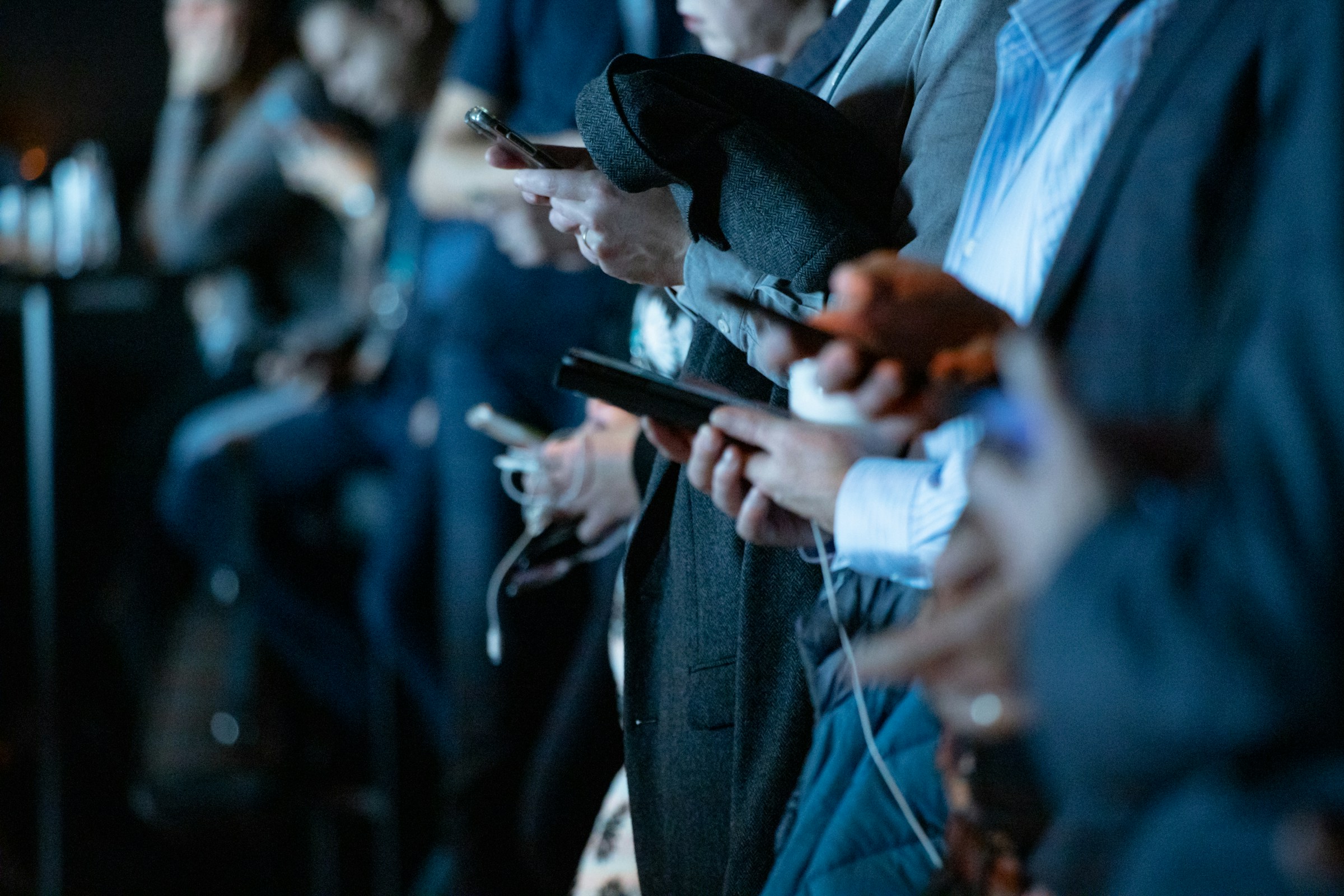
Search isn't disappearing, SEO isn't dead. But... It is democratising.
In 2026, people are obviously still searching, searching for answers, products, ideas, and recommendations, but they’re no longer starting with, or relying wholeheartedly upon, Google. Instead? They’re starting in feeds, comment sections, creator videos, and platform-native search bars across TikTok, Instagram, YouTube, Reddit, and beyond.
This shift isn’t coming. It’s already happened. We've been shouting about it since April 2024. But 2026 is a fantastic opportunity for brands to get on board and create their discoverability engine.
At Deviation, we've developed our entire proposition around this idea, establishing Search Everywhere®: the reality that discoverability now happens across platforms, formats, and moments, and we now believe it often occurs before users consciously realise they’re searching at all. Social-SEO isn’t a new channel or a bolt-on tactic. It’s a fundamental evolution of how search works, how brands win.
This guide breaks down what Social-SEO actually means in 2026, why most brands are still mis-optimising for yesterday’s audience behaviour, and how to build presence and preference where discovery really happens.
Social Media platforms are search engines
For years, SEO strategies assumed one simple behaviour:
Someone has intent → they open Google → they type a query → they click a result.
That linear journey no longer reflects reality.
Today, billions of searches happen directly inside social platforms every day. We now know that People aren’t just “browsing” social media. They’re actively searching for:
- How-to
- Reviews
- Comparisons
- Product recommendations
- Explanations
- Inspiration
And critically, they expect answers in video, both long-form and short-form, but importantly not via traditional text formats.
How Brands Should Actually Prioritise Platforms in 2026
In 2026, platform prioritisation shouldn’t start with age brackets or broad B2B vs B2C assumptions. It should start with context and evidence.
Essentially, a smart marketing strategist will no longer asking “Which platforms should we be on?” as a generalistic approach to digital. Instead, they’re asking “Where are the most relevant conversations already happening?”
Tools like Buzzabout.AI, Exploding Topics, SparkToro, and platform-native, social media analytics suites, all allow brands to identify:
- Where specific topics are gaining momentum
- Which platforms those conversations are occurring on
- How audiences are framing questions, problems, and opinions
- Whether interest is spiking, stabilising, or compounding over time
This matters because not every platform plays the same role in discoverability.
Some platforms act as trend accelerators, where interest spikes quickly and fades just as fast. Others act as authority builders, where consistent presence compounds visibility over months or years. A Search Everywhere® strategy requires both - but not equally (and here is where the context of your brand really starts to matter).
Rather than spreading thinly across every network, brands should:
- Identify which platforms consistently surface their category’s conversations
- Understand how people search and discover within those environments
- Commit to long-term, repeatable content systems on platforms that reward consistency
For many brands, this means resisting the temptation to chase every emerging channel and instead doubling down on platforms where:
- Search behaviour already exists
- Content has a long shelf life
- Visibility compounds rather than resets
Search Everywhere® doesn't mean be everywhere, it isn’t about being everywhere at once.
It’s about being consistently present where discovery actually happens, and letting data, not demographics, dictate where that is.
How People Actually Search on Social in 2026
One of the biggest mistakes brands still make is treating social platforms like places for trend-hopping, format hopping, and aesthetic visuals.
In reality, this has rarely delivered on the goals of the wider business. And sure, you get brand anomalies like Curry's (who kill their socials). But remember, for every Currys, Ryanair and Duolingo, there are at least 100K businesses you cannot remember a single asset from.
So, in 2026, start to think about social-media more strategically, it can be more than trend-hopping. How? Well, because people use social search the same way they use search engines, except with more context.
They don’t type short-tail keywords. They type full questions. They demonstrate Intent.
Think:
- How do I stop my dog slipping out of their harness on walks?
- How do I avoid taxi scams when I land in a new country?
- What should I wear to the gym if I’m new and self-conscious?
These queries contain the things we should have been focused on within SEO all along. They demonstrate a pain, need, want or desire, and surround it in emotion, context, and intent.
And, as is the case with Traditional SEO in 2026 and also the emerging AI/LLM platforms in the conversation, social platforms are either built, or being remapped, to recognise them.
TikTok surfaces trending search questions to creators and audiences alike.
Instagram indexes captions and on-screen text and its not contributing to Traditional visibility.
YouTube transcribes spoken words and matches them directly to user queries - it is then surfaced across the search universe.
Therefore, in a world where attention is the currency, having the ability to demand attention, via showcasing your solution to a pain, need, want or desire in a socially native format isn't a 'nice to have', it is becoming the game.
Structuring Content So Algorithms Can Understand It
Great content doesn’t win if platforms can’t understand it, whether that was the need for technical foundations for Traditional SEO or through to way we connect with social-search, AI/LLM and forum platforms - giving content structure and form has always been part of the skillset of an SEO.
It is this writer's opinion that this cannot change, the platforms may change and develop, but we should always be the team recommednign structure and aligning that across teams.
If Social-SEO is new to you then, and you're wondering how to structure efficiently, here is what you need to know.
Modern social algorithms skim content the same way humans skim web pages. They look for:
- Clear topics
- Obvious structure
- Reinforced key points
- Consistent language across captions, visuals, and speech
Unstructured creativity might look impressive — but to an algorithm, it’s noise, the algorithms want you demanding and retaining that attention.
That’s why creators who use:
- Clear hooks
- Sectioned captions
- Bullet-style information
- On-screen text that mirrors spoken points
- Subtitles for transcription
Well, they consistently outperform those relying on factors outside of these, AKA the visuals.
At Deviation, we think of this as our Organic Creator Content, content designed to be understood, classified, and surfaced (time and time again), not just watched once and forgotten.
If there’s no clear topic, the algorithm can’t categorise it.
If it can’t categorise it, it won’t distribute it.
If it won’t distribute it, discovery dies.
And if our discoverability engine dies... our brands cannot expect to perform.
Social Search, Digital PR & the Compounding Effect on Discoverability
Social search and digital PR are no longer separate disciplines. In a Search Everywhere® landscape, they reinforce each other - and when connected properly, they accelerate both preference and discoverability.
Social search surfaces what people are asking right now. Digital PR amplifies who gets trusted to answer. When these two systems work together, brands don’t just appear more often - they appear with more trustworthiness, authority and relevance AKA preference.
Social platforms are where questions, frustrations, and emerging narratives first show up. Digital PR then turns those moments into visibility at scale by placing brands inside the conversations that shape opinion, whether that’s creator content, expert commentary, community threads, or earned media that gets shared, referenced, and re-used across platforms.
The key shift is this: PR is no longer just about coverage, and social search is no longer just about content. Together, they create preference around intent.
When a brand consistently answers real questions on social, using natural language, structured formats, and platform-native storytelling, it is that content which becomes:
- Referenced by creators
- Quoted in articles
- Shared in communities
- Pulled into AI-generated answers
At the same time, digital PR placements increasingly live where search happens, the traditional effort of only outreaching to journalists who publish on text-based publications is DEAD... Instead, have you considered: YouTube explainers, Reddit threads, TikTok commentary, podcasts, and social-first publications. These aren’t secondary touchpoints... they’re primary discovery surfaces.
The result is compounding visibility. Social content builds familiarity. PR builds authority. Algorithms, platforms, and AI systems recognise repeated signals across sources and reward them with increased distribution.
In 2026, brands don’t win by choosing between social search or digital PR. They win by connecting them, using social insight to inform PR narratives, and PR to amplify the answers people are already searching for.
That’s how presence becomes discoverability... turns into preference, and preference turns into demand.
Social-SEO, AI Visibility & the Measurement Problem
Here’s where things get even more interesting, and it is here where a lot of attention is being invested incorrectly too.
Why? Well, think about this... Social content doesn’t just affect social platforms.
You see, Google are leaning on the feeds for its 'Short Videos' SERP feature. When someone asks a brand term and research by the AI/LLM takes place, or when AI/LLMs are retrained more aggressively, the machine can be expected to be trained by you and your content.
Tools like ChatGPT and/or Gemini frequently cite Reddit threads, YouTube reviews, and social content - not just traditional websites!
That means:
- Your social content influences AI answers
- Discovery happens without clicks
- Traditional analytics under-report impact
Traffic might appear to drop, while revenue increases.
Attribution becomes fuzzy.
Influence becomes invisible.
So what should brands measure instead?
- Percentage of reach coming from search on each platform
- Saves and shares as indicators of long-term value
- Brand mentions across comments, Reddit, and AI responses
- Competitive visibility in AI-generated answers
- [Brand] Search Development (AI/LLM & Traditional SEO)
- [Brand] + [Term] Brand Mentions for Pops'
This is why Social-SEO isn’t just a marketing tactic - it’s a hedge against attribution decay.
What a Social-SEO Strategy for 2026 Actually Looks Like
A real Social-SEO strategy isn’t a checklist. It’s a system.
At a high level, it requires:
- Platform-specific search research , KWR and Intent mapping
- Question-led content planning (lean on AlsoAsked)
- Structured creative practises that drive [Brand] or [Brand] + [Intent Term] searches
- On-Platform 'Important' Metrics Analysis
- Off-platform conversion alignment
- Authority building across social, search, and AI surfaces
Most importantly, it requires abandoning channel silos.
Search, social, content, PR, and AI visibility are no longer separate disciplines. They’re expressions of the same discoverability problems for brands, and they need to be solved together.
That’s the foundation of Search Everywhere®.
Let's wrap this up...
What all of these examples have in common is that they don’t start with products, platforms, or brand messages, they start with real questions, phrased exactly how people think, speak, and (as we enter 2026) search.
Whether someone is worried about their dog’s safety, trying to remove friction from a stressful airport arrival, or feeling intimidated about going to the gym, it's almost always the case that discovery begins with a problem (pain, need, want, desire), not a keyword.
In a Search Everywhere® landscape, brands build presence (visibility) by showing up as the clearest, most helpful answer in those moments - across feeds (via owned and creator content), search bars, comment sections, and even AI-generated responses. The brands that succeed in 2026 will be the one who is most aligned with how people actually look for answers within relevant conversations.
Social-SEO isn’t about chasing TikTok trends or 'gaming' algorithms for short-term wins.
It’s about recognising that:
- Discovery now happens before intent is formed
- Feeds shape user-journeys and stages of them
- Platforms reward retention
- AI systems amplify social authority
- Clicks no longer tell the full story
The brands that win won’t ask, “How do we rank on Google?”
They’ll ask, “How do we become the answer - everywhere people look?”
That’s not the future of SEO.
That’s the present.
Search Everywhere®
Frequently Asked Questions
%20(3).avif)